
Brought to you courtesy of Catholic Ireland
25th Sun Ordinary time -Year A
– 20-09-2026-
The Twenty-Fifth Sunday in Ordinary Time Year A
World Day of Prayer for Migrants and Refugees
Gospel reading: Matthew 20:1-16
vs.1 Jesus told this parable to his disciples:
“The kingdom of heaven is like a landowner going out at daybreak to hire workers for his vineyard.
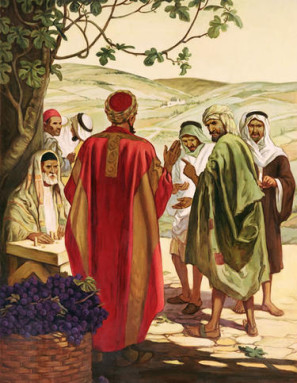
vs.3 Going out at about the third hour he saw others standing idle in the market place
vs.4 and he said to them, ‘You go to my vineyard too, and I will give you a fair wage.’
vs.5 So they went. At the sixth hour and again at about the ninth hour, he went out and did the same.
vs.6 Then at about the eleventh hour he went out and found more men standing round, and he said to them, ‘Why have you been standing here idle all day?’
vs.7 ‘Because no one has hired us’ they answered. He said to them, ‘You go into my vineyard too.’
vs.8 In the evening, the owner of the vineyard said to his bailiff,
‘Call the workers and pay them their wages, starting with the last arrivals and ending with the first.’
vs.9 So those who were hired at about the eleventh hour came forward and received one denarius each.
vs.10 When the first came, they expected to get more, but they too received one denarius each.
vs.11 They took it, but grumbled to the landowner.
vs.12 ‘The men who came last’ they said ‘have done only one hour, and you have treated them the same as us, though we have done a heavy day’s work in the heat.’
vs.13He answered one of them and said,
‘My friend, I am not being unjust to you; did we not agree on one denarius?
vs.14 Take your earnings and go. I choose to pay the last-comer as much as I pay you.
vs.15 Have I no right to do what I like with my own? Why be envious because I am generous?’
vs.16Thus the last will be first, and the first, last.“
*****************************************************************
We have four sets of homily notes to choose from. Please scroll down the page for the desired one.
Michel DeVerteuil : Holy Ghost Priest , Teacher of Lectio Divina
Thomas O’Loughlin: Prof of Hist Theology, Uni of Nottingham, England
John Littleton: Director,Priory Institute, Tallaght, D 24
Donal Neary SJ: Editor of The Sacred Heart Messenger
****************************************
Michel DeVerteuil
Lectio Divina with the Sunday Gospels- Year A
www.columba.ie
General Comments
We have another parable this Sunday, one that many people find particularly difficult to interpret.
As I said in last week’s meditation guidelines, method is always the root problem with interpreting parables, and to adopt the right method we must have a right understanding of what a parable is. It is not the kind of story where we identify “good guys” and “bad guys” and then draw the conclusion that we must imitate the good and avoid being like the bad.
A parable is like what we call today a “short story“. We enter trustingly into the movement of it, identifying with the characters at the different stages, until we come to a point where we find ourselves saying, “Yes! I recognise this experience” – an experience of sin to which we respond, “Lord have mercy”, or a moment of grace for which we say, “Thank you, Lord”.
The parable will then lead us to a new insight, a conversion, so that we have a better understanding of grace, of life and eventually of the nature of God. Of course, it will be an insight “of the heart“, one that touches us deeply, not abstract but based on experience, one that leads to deeper prayer.
In today’s parable, therefore, we must resolutely refuse to enter into a discussion about whether the landowner was right or wrong, and especially to ask how he is like God. Once we follow that route we are into our heads, our imaginations are blocked, we are distracted from the task of interpreting the parable and letting it lead us where it will. The sign that we have interpreted the passage correctly is that we experience the inner freedom to move forward and be more creative in our God-given vocation.
Having got these principles of interpretation clear, we can divide the passage into six movements:
– verse 1 : the hiring of the servants;
– verses 2 – 5 : the fixing of the agreement and the later hirings;
– verses 6 – 7 : the last hiring;
– verses 8 – 12 : the complaint of those hired first;
– verses 13 – 15 : the response of the landowner;
– verse 16 : the final saying.
At each stage, we can identify with either one of the two protagonists – the landowner or the hired servants.
The climax of the story is in verses 8 to 15. The lessons Jesus wanted to teach are to be discovered here. Our meditation must be a slow journey through these verses, taking our time over each one.

we have been hard done by,
did not get what we deserved.
On these occasions we always find ourselves making comparisons between ourselves and others, that vague but all-encompassing “they”. “They” did not have to work as hard as we did;
“their” families had fewer problems;
“their” age is more exciting; life was easier to cope with in “their” time.
We then move to the landowner’s response, which is in several steps. He shows compassion first; he is not condemning, and neither should we be – of ourselves or of others. He calls the man “my friend”, a simple but very touching gesture – the landowner understands how the man feels. We celebrate people who have shown us this kind of compassion, or times when we have been similarly compassionate to others.
The landowner then explains his position, logically and rationally.
We think of ourselves having to deal with a friend’s jealousy,
a mother reassuring the child who feels left out,
a manager reassuring workers who think that their work is not appreciated.
The landowner puts forward three arguments.
The first is simply to reassure the worker that he has been justly treated, “I am not being unjust to you, did we not agree on one denarius?” We must be careful to interpret this in the context of the parable, which is that of deep human relationships, even of our relationship with God.

The landowner’s second argument is also very touching: “Have I no right to do what I like with my own?” We grasp here that envy is closely linked to possessiveness.
[caption id="attachment_129588" align="alignleft" width="284"]
We want to possess people (or things) because we are afraid that if we have to share them with others there will not be enough for us. Who are the people who taught us that this is not true, that someone can love us deeply and yet can be close to others in ways they are not close with us? This can happen even between spouses, as we know, and of course between us and God.
The third argument is in the form of a question. “Why be envious because I am generous?“ It is a further teaching on envy, through experience as always, the experience of a confrontation between an envious person and a generous one.
Envious people calculate, look at what others have and they don’t, what they could have got and didn’t. Generous people are spontaneous, respond to situations as they present themselves, don’t worry about pleasing everyone – but careful to be just. We have been and have met both kinds of people.
That then is the climax of the parable; but it would be good to retrace our steps to verse 1 and the image of the “hiring”. The parable is a living lesson on both the value and the limitations of learning deep truths through images. 
With verses 8 to 15 the story takes a radically new turn. It tells us, no! we are not the landowner’s hired servants but his ‘friends‘, free people, not “hired” by anyone, not even by God. Look on God as a “hirer of servants” and we misunderstand him completely. So too the rewards we receive for our service are not “earnings” but gifts we receive with humble gratitude.
Making the journey from the image in verse 1 to having it corrected in verses 8 to 15 brings new life to the parable. By making the journey from “God as hirer” to “God as friend” or “God as lover” we discover the wonder of love, human and divine.
The Pharisees did not make the journey, and we have all been like them at one time or another. How often have we Christians (and the Church) made God into a cold calculator of rewards – an AI computer even! The parable throws out a challenge: do people experience in our words and actions the generosity and magnanimity of God?
The parable is a lesson in economics too. The word’s economic system is based on the notion that everyone must receive only what they have worked for. The result is the ever-widening gap between rich and poor.
The parable tells us that the wealthy are afraid to share God’s gifts, they might not have enough for themselves! If humanity could enter into God’s generosity, there would be plenty for all.

We celebrate moments when we have experienced the unpredictability of life as a grace; humble gratitude that we who were “last” found ourselves “first“; the conversion of recognising that someone we had rated “last” was really “first”; accepting to be “last” and leaving it to God to make us “first” whenever his time for doing so comes.
Prayer Reflection
Lord, we thank you for the people in our lives who taught us that true love is always generous and helped us move beyond possessiveness and envy:
* one of our parents when we complained that they were paying more attention to a truant brother or sister than to us;
*a very dear friend of whom we began to be possessive;
* a spouse whose care for an in-law made us jealous;
*a leader trying to keep peace in the parish community.
They did not reject us, but were understanding, like the landowner in the parable:
~ they took time to reason with us;
~ showed us that in fact their love for us had not been compromised in any way;
~gradually brought us to the point where we could accept their love and go our way.
They were Jesus for us, teaching us the kind of person you are
and leading us to enter into his unconditional love,
and to be generous ourselves in welcoming every member of our human family and friends..
Lord, our modern culture is ruled by envy, not generosity, and is tearing our human family apart.
Our contemporaries often think that life’s rewards should be calculated on the basis of work done, and as a result they are obsessed with rights,
+ forever comparing their lot with that of others;
+ grumbling that they have done a heavy day’s work in all the heat;
+ on the lookout to see if others who only work for an hour are treated the same as they are.
Lord, we thank you for the times when you give us a glimpse of your kingdom, invited us to enter into your generosity and set us free from the bondage of envy.
Forgive us for when we grumble at you for the way you share out your blessings, comparing ourselves with others who we think had things easier because
– they were born in wealthier circumstances than we were and ended up being more successful in their careers;
– they didn’t need to study hard to succeed in examinations;
– they got a lucky break when we didn’t;
– they led a dissolute life and then became fervent members of the church.
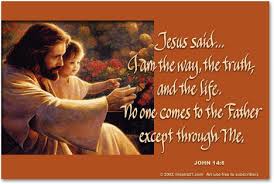
We thank you that you send us spiritual guides
who walk with us and help us move beyond these feelings:
– a priest or other community leader,
– one of our children,
– a stranger with whom we found ourselves in conversation,
– a member of another church or community.
They do not condemn us, but call us “friend”;
gently they show us that the root of our problem is being calculating
instead of welcoming life as your gift;
they remind us of the many ways in which life has been fair to us too:
– we have had our successes,
– got our own lucky breaks,
– enjoyed many beautiful moments.
Now we find that we can face the challenges of life with inner peace,
– allowing you to do what you like with your own,
– entering into your generosity,
– knowing that at the end of the day you will be faithful to your covenant of everlasting love.
Like contented labourers who at the end of the day take their earnings and go,
we accept what life brings us and move forward to do the work you want us to do in the world.

Lord, we pray that your church will be the presence of Jesus in the world, showing the wealthy nations of the world and the wealthy people within individual nations how false is the argument that they hold their position because they have done a heavy day’s work in all the heat,
and proposing to them the vision of your kingdom, marked by generosity, not envy, where those whose circumstances have allowed them to work only one hour receive a full reward.
*********************************************************
Thomas O’Loughlin
Liturgical Resources for the Year of Matthew
www.columba.ie
Introduction to the Celebration
When we assemble around the Lord’s table we bless God for his forgiveness, mercy, generosity and love: he has sent us his Son to bring us pardon, to transform us from being isolated individuals into the community of his love, and he gives us the hope of everlasting life. So, as God’s holy people, we recall that God is merciful and forgiving; God is life-giving and generous; and that God is love.
Homily Notes
1. Parables are little tales that are intended to shock the perception of an audience; they are not little moral stories that we are to learn from by decoding each element. Alas, we do this so often that we destroy them.

3. The simple fact is that if you have had to work all day, you deserve recompense pro rata.
The interesting thing is that we are all associating ourselves with the group who have laboured all day, not with the last group that have been indulged.
4. Yet, we are looking forward to the fullness of the kingdom not because we deserve it because we have worked so far and for long, but because God is forgiveness, mercy, generosity and love.
5. We are one-hour workers, but we are looking forward to the fullness of life.
****************************************************************
John Litteton
Journeying through the Year of Matthew
www.Columba.ie
Gospel Reflection
Sometimes we question God’s dealings with other people because they seem to receive better treatment from him than we think they deserve. They do not measure up to our often impossible standards. They may be lazy and unreliable. Perhaps they argue and fight constantly. Or they may not have our talents and skills. Consequently, in our opinion, they are unworthy of any favour or special status. So why would God treat them differently?

Fortunately, however, God’s ways are very different from our ways. Unlike many of us, God is not envious or spiteful. He does not have a ‘pecking order’, placing some people at the top and relegating others to the bottom. God has no favourites. As far as God is concerned, everyone has a unique dignity and equal worth.
It can be very difficult to appreciate that, with God, all people are special. Because everyone is important, God’s generosity is marvellous and God’s mercy is limitless. That is how God chooses to be God and we are challenged to respect God’s will. After all, God is our Creator and we are God’s creatures. God has rights too and these rights demand that we let God be God.
The lesson of the parable of the landowner hiring workers for his vineyard is that it challenges us to be grateful to God for what he gives us, and exhorts us to avoid feeling cheated and complaining about the seeming good luck and better fortunes of other people. Also, if we believe that we are made in the image and likeness of God then we need to imitate his generosity and compassion in our behaviour towards other people. Rather than applying human standards to God, we need to apply God’s standards to ourselves.
The Good News is that God’s love and mercy are available to all, saints and sinners alike. When we are privileged to know that God loves us in all circumstances and saves us from our sins, why would we permit rivalry to emerge between ourselves and others whom God treats differently from how we treat them? Is it not sufficient to be assured that our eternal destiny with God is secure because of our faithfulness to Christ’s great commandment, without being jealous and resentful of other sinners’ opportunities for salvation?
When God is generous and merciful to other people, he is not being unfair to us. He is simply being God. Our understanding of God, then, needs to change and we need to let God be God.

For meditation
Why be envious because I am generous? (Mt 20:15)
***********************************************************
Fr Donal Neary, S.J
Gospel Reflections for the Year of Matthew
www.messenger.ie
Deserving our rights
We often say that people don’t deserve welfare or food if they don’t work. We can be stingy in judging what others deserve and need.
Jesus has a new way. We deserve our rights even when we do the least. The denarius was a day’s wage, enough to live on. There are certain rights we all have – to have food and a job are two of them. These people wanted to work. We are rewarded by God for who we are, not for what we do.
Jesus’ vision is that everyone deserves to earn enough to live on.
To believe in a God who is an unconditional Friend, is to have the most liberating experience that one could imagine. On the contrary, to live in the presence of an avenging and threatening God could change us into the most dangerous and self-destructive neurotics. We need to learn not to confuse God with our own narrow and stingy plans. We sometimes wish to distort God’s unfathomable goodness. (Jos<§ Pagola).
That’s the way the kingdom of God grows. It grows within us in thanks and sharing. That’s what we do at every Mass. Success for Jesus is not the amount we do, but that we do things with a full heart.
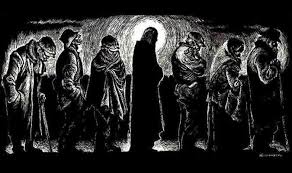
Recall the picture of a dole queue or a provision centre and pray.
Lord, may all I do this day and week begin with your inspiration
and end with your pleasure. Amen.